Delivered a talk on social media research ethics at a CERN workshop in Geneva

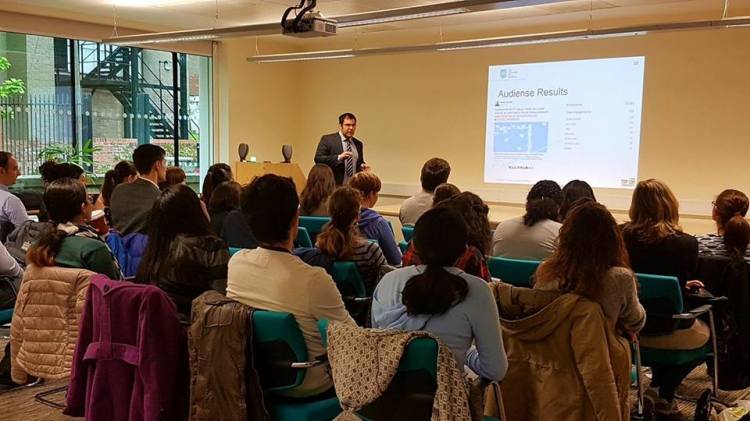
Myself and Professor Peter Bath, pictured below, from the Health Informatics Research Group, recently delivered a talk at a CERN workshop in GenevaThe talk was based on the industry and academic perspectives on social media research ethics, and the also talk highlighted the approach that has been undertaken by the University of Sheffield.

AAA cern 1

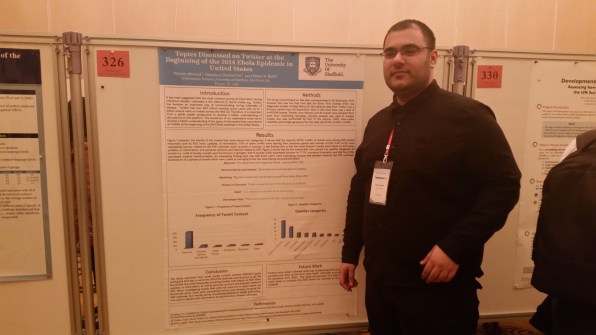
I also presented a poster my PhD research during the CERN workshop, as pictured below.

BBB cern 2


Delivered a workshop at SITraN to the Society of Spanish Researchers in the United Kingdom on Communicating Science through Social Media

On Saturday the 13th of May I delivered a talk on communicating science through social media in collaboration with the University of Sheffield. I shared my experiences on how I reached readers in over 136 countries and how I received over 250 thousand page hits across a number of channels within the first two years my PhD. My slides for the talk can be found here.

LSE impact

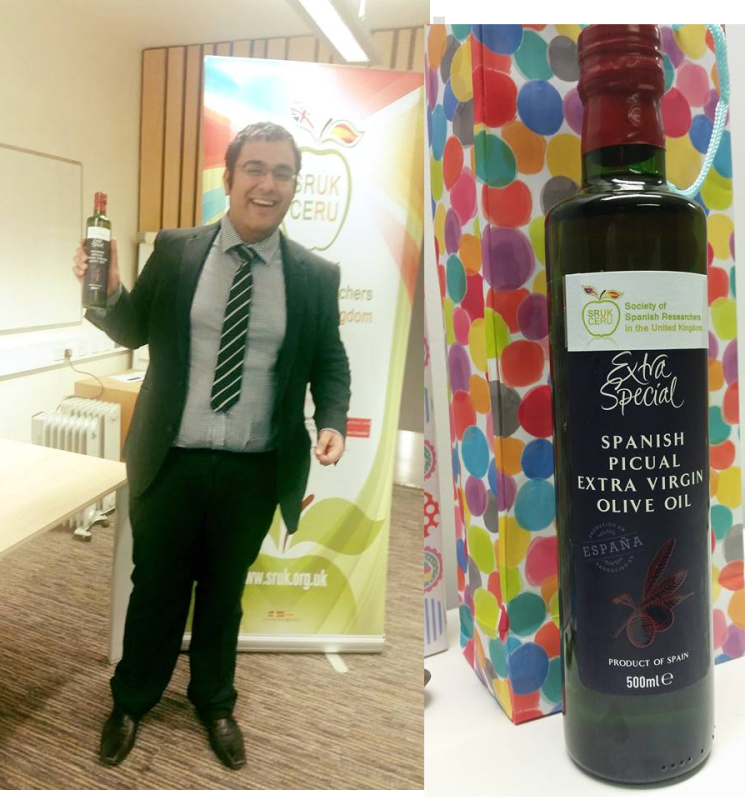
The event had an extremely good turnout for a Saturday afternoon, and the atmosphere of the Society of Spanish Researchers in the United Kingdom was very lively and friendly. I would like to thank the organisers and especially Margarita Segovia Roldan and Jacobo Elies Gomez pictured below.

TALK PICS

I was also very happy to receive a gift of  Spanish Picual Extra Virgin Olive Oil. This was the first time I had received a gift after a talk. The Spanish Society of Research is awesome! Gracias!

TALK PICS.png

Using Twitter as a data source: updated for 2017!

Yesterday, I updated my post on the LSE Impact blog on using Twitter as a data source and it is already among the most popular read this week!

Be sure to check it out here.

Twitter as a data source


iConference 2017 in Wuhan, China Highlights

Last week, I attended the 2017 iConference in Wuhan, China. I provide some highlights from my trip below, along with some of my photos from the trip.

My highlights from my trip included me presenting a poster on my pilot study from my PhD, and which received good interest from delegates, particularly concerning the methodology that was used. A number of very useful connections were made from across the world, and there was a lot of interest in the 2018 edition of the iConference which will take place in Sheffield hosted in collaboration with Northumbria University.

20170323_175227


I also enjoyed visiting the Yellow Crane Tower, Hubei Provincial Museum, the East Lake, Wuhan, and the Yangtze River. Wuhan is a beautiful city, and the people are very friendly. I read online that the people in Wuhan are unusually nice, and I have to say that this is very true and I felt very welcome in the city.

1a
Yellow Crane Tower
3a
Yangtze River
4a
Hubei Museum


It was also really good to meet Lee (Dr Xuguang Li) an Information School alumni who is now working as an academic in Wuhan. Lee was a very popular student among the iSchool, and I had heard many great things about him, so it was a pleasure to meet him, and we are very grateful that he showed us around Wuhan. I look forward to working with Lee in the future.

2a
Me and Dr Xuguang Li

I am looking very much forward to the iConference in 2018 and welcoming delegates from across the world to Sheffield. I was born and raised in Sheffield and studied both my undergraduate and masters degrees here. Sheffield is a brilliant city, and I think delegates will really enjoy visiting the city as well as enjoying the conference.

Great to present at iConference 2017 in Wuhan, China

This past week I have been in Wuhan, China presenting at the 2017 iteration of the iConference.

20170323_175227.jpg
Enter a caption

This study was a pilot study which analysed a subset of tweets related to the 2014 Ebola epidemic.

Great to speak at PubhD Sheffield

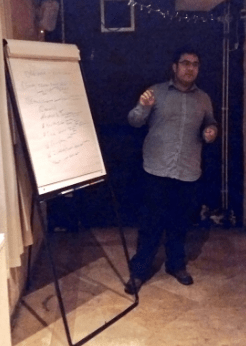
I had the pleasure to speak at a PubhD event in Sheffield this week. The concept is to use a whiteboard and a marker pen to explain your research in 10 minutes, followed by 20 minutes of questions. In exchange for speaking you receive a free drink, and I had a pint of diet coke. The event is a great way to test out your public speaking and engagement skills. and as a delegate it is a fantastic opportunity to learn something new.

I saw on the PubhD Sheffield Facebook page that a speaker had dropped out, so I messaged to see if I could speak. With less than a day to prepare I stepped up to the challenge. My talk went down very well, and there were a lot of very interesting questions.

ME1234.png
Me delivering my presentation image courtesy of Emily Fisk

I have delivered many talks over the last year or so, and I have to say speaking at PubhD Sheffield is up there as one of the best. The organisers were very friendly and fit me in at the last minute, and all of the delegates were very lovely.

I highly recommend this event for attending and speaking at. I had a really good time. It was also a great opportunity for me to get feedback on my work, so I also really enjoyed that aspect of the night.

Visit the PubhD Sheffield website: http://PubhDSheffield.strikingly.com/

Follow PubhD on Twitter: https://twitter.com/PubhDSheffield

My abstract for the talk

Social networks and social media allow people to share what they think during an outbreak. So my PhD looks at the types of things people say, and whether it based on truth, and to see if it would be harmful. I am looking at Ebola from 2014, and Swine Flu from 2009. I have some found some surprising and interesting things about what types of things users were talking about. For example there is a lot of stigma and discrimination during infectious disease outbreaks can have negative consequences. As well as doing my PhD, I have blogged about social media research and as a result I have been invited to and delivered quite a lot of high profile talks. These have been to government, multi-million turn-over companies, academia, the mainstream media including the likes of the BBC, and I have been awarded funding to work on projects, and deliver training

Ethical Challenges of Using Social Media Data In Research

Check out my talk on the ethical challenges of using social media data in research for   delivered as part of the Bite Size Guide to Research in the 21st Century on the 24th of January, Sheffield, ScHARR. Thanks very much to Andy Tattersall for organising this very great event, and to Dan Smith for editing this very good video. Watch here:

Comments, and thoughts welcome.

New post for the LSE Impact Blog

Today, the LSE Impact Blog published an article co-authored with the Head of Digital from the University of Sheffield titled:

Twitter and crisis communication: an overview of tools for handling social media in real time

Tips for a Professional Social Media Profile

I’m always asked for tips and tricks form academics or those from industry starting out on Twitter and other social media platforms. So I thought I’d collate my responses into 5 points.

I draw on principles covered in the Art of Social Media: Power Tips for Power Users which is a really good read for anyone thinking of building a profile on social media. In no particular order here are 5 tips:

  • Pick a relevant screen name and/or Twitter user handle. I would suggest using your name and including it as your ‘@’ handle e.g., @JohnSmith.
  • The overall look of your profile is very important as the users visiting will make a snap judgement with the information you provide, and the image that you portray. I’d say scrap the long paragraphs and communicate key points.
  • You need a good profile picture, it has to look professional, and it has to be of your face. Stay away from poor quality pictures and if necessary hire a professional to take a picture. Make the picture the brand and use the same picture across social media platforms.
  • If possible, have a blog and/or website unique to yourself that you list across your social media platforms. Produce content relevant to your discipline that can be shared and linked back to you.Examine what is in the media and see if you can draw a link from the work in your discipline either for a tweet or a blog post.
  • Follow users within your discipline, and remember to engage with other Twitter users rather than solely post your own content. If you like, retweet, or share another users post then they are likely to reciprocate.
  • Produce regular content and produce a content sharing plan. Alternatively, you can use a social media managing platform such as Hootsuite or Buffer. When considering what to share remember that visual posts gain more engagement, and tweets with hashtags will attract a larger number of views and impressions. The time of sharing a post will affect how many impressions and engagements it will gain, so don’t be afraid of sharing similar content throughout the day. Below is a useful table adapted from the Art of Social Media: Power Tips for Power Users:

Table 1 – Recommended number of posts per social media platform

Platform
Casual users
  Hard core users
Facebook
1-2
3-4
LinkedIn
1
4
Twitter
8-12
25

These tricks will certainly increase engagement on your social media accounts.

One of my clients Gary Spence, Managing Director of Hybrid Supply Chain Ltd, was able to increase his social media statistics significantly within a matter of weeks by following this methodology:

Figure 1 – Increases in Gary’s social media statistics within 1 month

increases

Do you want help running a professional social media account? Drop me a message for a quote!

References 

Art of Social Media: Power Tips for Power Users

Acknowledgments

Many thanks to Andrew Latchford, from the VP Group Ltd, for inspiring this post.

Echosec: Location-Based Social Media Search – Potential For Academic Research And Industry

Echosec, simply put, allows you to navigate to almost any location in the world and examine the social media activity around that vicinity.  Currently Echosec Pro allows users to access at least the following social data feeds:

  • Instagram
  • Twitter
  • Foursquare
  • Panoramio
  • AIS Shipping
  • Sina Weibo
  • Flickr
  • YouTube
  • VK

The Echosec platform provides enormous research potential as it is possible to select a specific geographical area and examine the social media activity around it.

cayzptxwwaaxw79
Echosec Dashboard Layout

Users can plot a rectangle, circle, or plot a custom shape almost anywhere in the world to display the social media activity around that area. Users can also use advance date filtering features to ensure only relevant posts are displayed.

Echnosec also has great potential in regards to business intelligence as it is possible to monitor chatter around a specific area. For instance, finding out that social media users in a particular area are complaining about the lack of particular store or product e.g., a coffee shop.

One of the biggest advantages of Echosec are that it is not based on a specific social media platform; it allows users to aggregate data from several popular social media networks.

In addition to location-based searching, it is also possible to search via keywords and examine where posts derive from. For instance, to find out whether users in certain geographical regions are mentioning a trending hashtag.

Echosec works by making use of location-based metadata to search for social media and other open source information. It relies mostly on a range of API requests directly to the social media networks (Twitter, Instagram, and Facebook etc), but also to third party information repositories.

Echosec is used by those within the Public Safety and Intelligence sector, the Corporate Security & Investigations sector, and within the Media and Journalism sector.

Used ethically and within the right hands, Echosec has great potential for public good. I also see it to have excellent potential for academic research projects.

Compared to some of the other social media analytics software out there, Echosec Pro is extremely affordable at only $89 per month annually. It’s definitely worth checking out. You can access the free version of Echosec here.

Disclaimer: No data was retrieved and/or analysed in the writing of this blog post.