Call for Papers: Social Entertainment and Digital Gaming

Call for Papers for the Oxford Intersection on Social Media for topics related to Social Entertainment and Digital Gaming

Specifically, we are seeking articles on the following topics:

•Role of social media within esports and digital gaming •Impact of social media and influencers on social entertainment

•Using social network analysis to uncover trends in esports and social entertainment.

•Using social media to uncover trends in digital collectables and blockchain in relation to digital gaming.

See the full call below!

Call for Papers: Oxford Intersections

Abstracts Deadline: 28 June 2024

Introduction: In 2025, Oxford University Press will be launching a new type of resource: Oxford Intersections. Oxford Intersections reflects the critical role that peer-reviewed interdisciplinary research plays in helping policy- and decision-makers tackle the world’s most complex and urgent environmental, cultural, political, and social challenges.

Topics of Interest: We invite abstracts for new interdisciplinary research articles on a range of topics for the section “Social Entertainment and Digital Gaming” of the Social Media Intersection. Specifically, we are seeking articles on the following topics:

  • Role of social media within esports and digital gaming
  • Impact of social media and influencers on social entertainment
  • Using social network analysis to uncover trends in esports and social entertainment.
  • Using social media to uncover trends in digital collectables and blockchain in relation to digital gaming.

Authorship: Oxford Intersections welcomes contributors from diverse backgrounds, spanning disciplines, institutions, geographies, and career stages. Authors may include researchers, academics, professionals, practitioners, PhD students, and on occasion final-year master’s students.

Submission Guidelines:

  • Manuscripts should be original and not previously published or under consideration elsewhere.
  • Abstracts should be submitted for one unit/section only; please indicate the section you are submitting for on the top of your abstract.
  • If accepted, articles should run between 5-8K words and will be rigorously peer reviewed and subject to editorial approval before publication.
  • To be considered, submit to OxfordIntersections.Editorial@oup.com a single document including:
    • An abstract of no more than 500 words
    • A brief CV for each author

Key Dates:

  • Abstract Submission Deadline: 28 June 2024
  • Notification of Acceptance: 15 July 2024
  • Final Manuscript Due: 23 August 2024

More about Oxford Intersections: Social Media

The pervasive use of social media illustrates a major transformation in human interaction at a global scale. It is often referred to as the fourth revolution in communication technology, succeeding the introduction of writing, printing, and audiovisual media. This transition has profoundly influenced nearly every aspect of society, including personal and community relationships, commercial transactions, knowledge acquisition, and the overarching norms, rules, and values that define societal relationships.

This work will explore the varied and complex impacts of social media, analyzing its beneficial and negative implications in light of cultural differences across the globe. The aim is to deeply engage with meaningful questions around individual and cultural identity, religious expression, news, journalism, politics, trust, audience engagement, commerce, online learning, health and well-being, and digital disruption. Such scholarship is expected to cultivate a more profound comprehension of social media’s function in contemporary society and the various directions it may take in the future.

Accepted manuscripts will undergo a rigorous peer-review process to ensure academic standards and relevance to the overall ethos of the Intersections project. Please see more here: https://academic.oup.com/intersections/pages/about

General Editor: Dr. Laeeq Khan

Section Editor: Dr Wasim Ahmed, University of Hull

For further inquiries, please contact OxfordIntersections.Editorial@oup.com.

podcast with Kaz Laljee on our research

It was great to speak with Kaz Laljee, Head of Digital from Soc-Med: Social Media, on our research on social media.

I discussed exciting trends and our research on social media activity for TV shows like Netflix’s Squid Game.

View the full podcast below:

New preprint: Endorsement of N95 Respirators on Twitter: is correct, complete advice being given?

In Jan 2021, medical N95s were in short supply for #COVID19. We didn’t yet have widespread therapy or vaccines. Industrial N95s were easy to get but not protective.

Was the Twitter conversation about what type to use clear & complete?

We used social network analysis drawing upon NodeXL and Gephi to find out! Our data revealed that most tweets by health influencers recommending N95s did not provide further details about the correct type of N95 mask and the vital need to ensure a proper fit for the mask.

Check out the full preprint paper here:
https://www.researchsquare.com/article/rs-2073260/v1

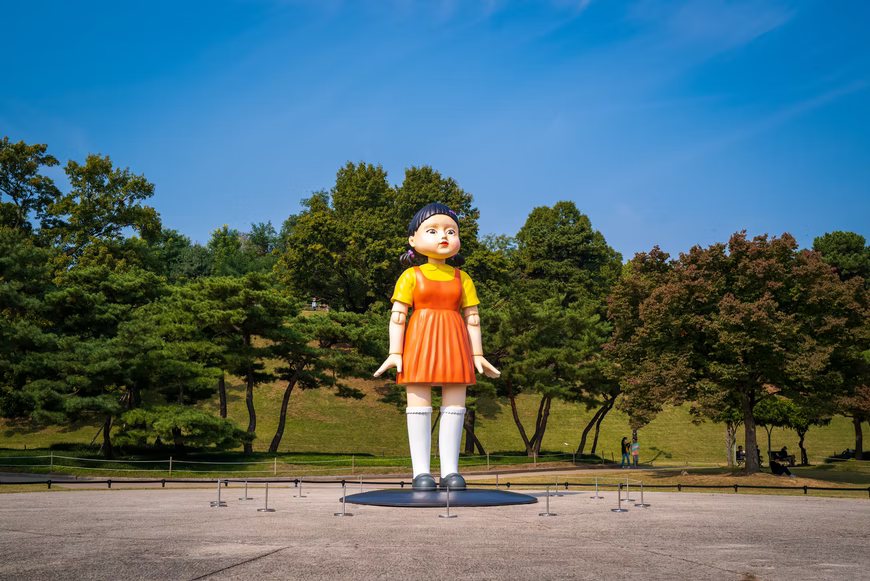
We investigated the role of influencers in promoting Netflix’s Squid Game

We analysed the social network of Squid Game during its first 24 hours using Twitter data. You can read our full paper freely here: https://journals.sagepub.com/doi/full/10.1177/22779752221083351

Thanks to Sung Jin Cho for making this photo available freely on @unsplash

Abstract

The management literature has extensively studied viral marketing in the last decade; however, there is a lack of research in understanding network structures and the role of influencers within popular cultural consumption, such as on-demand digital media and binge-watching. In this article, we investigate the role of social media in popularising the East Asian dystopian cultural drama Squid Game. We studied this phenomenon by analysing social network structures, dynamics and influencer characteristics that transformed Squid Game into a popular global digital cultural consumption sensation. Stemming from the foundational theories of popular culture binge-watching, network theory and the social media echo chamber effect, we demonstrate how careful ‘seeding’ and ‘broadcasting’ behaviour adopted by Netflix and key influencers helped the ‘reciprocal merging’ of creative media content within the broader social media space. Our study found that 13,727 Twitter users were tweeting or mentioned on the day show was released. Our research findings further present the characteristic of individual group-based echo chambers and their role in value co-creation towards expanding the network boundary through e-WOM. This phenomenon led to the show’s unprecedented popularity amongst a global audience within a short period. Contributions of our work expand viral marketing and echo-chamber concepts into the binge-watching and popular digital culture realm, where the interplay between dramatized Asian and Western dystopian social norms provided the very fabric of user-led promotion and value co-creation.

New article in the conversation

Online abuse in sport: why athletes are targeted and how they can end up winning

How clubs and support teams can help deflect the negative impact of social media.

Check out the full article here:

https://theconversation.com/online-abuse-in-sport-why-athletes-are-targeted-and-how-they-can-end-up-winning-174569

Social media and sports research collection

Interested in social media and sports-related research? We’ve recently published three peer-reviewed journal articles in this area that are freely available to read:

Understanding a Football Club’s Social Media Network: An Exploratory Case Study of Manchester United (LINK)
Information Discovery and Delivery

Social Media Conversations About High Engagement Sports Team Brands (LINK)
IIM Kozhikode Society & Management Review

Applying cognitive analytic theory to understand the abuse of athletes on Twitter (LINK)
Managing Sport and Leisure

Exploring nurses’ online perspectives and social networks during a global pandemic COVID-19

We recently had a, fully Open Access, paper accepted for publication in the Public Health Nursing journal

Below you can read an extract from our paper on the principal findings:

“This study showed the social networks and interactions of nursing actors on Twitter during the early months of COVID-19. It highlighted discussion hubs, containing nine of the most influential users in the network, as well as smaller more disconnected groups. A number of key perspectives on COVID-19 from nursing actors were also revealed. Nurses recognized a lack of preparedness and control on a macro-level in terms of how governments handled the crisis, highlighting failures in contact tracing systems and lack of PPE. The capacity of healthcare organizations to protect the safety and rights of nurses and other professionals at work was also questioned. Nursing actors reached out through social media to political and nursing leaders to advocate for change such as using more technology to identify and manage COVID-19. Nurses also critiqued the quality of information available on the global pandemic, reflecting the scientific uncertainty that characterized its early stages. They emphasized the need to distinguish between misleading information versus emerging scientific evidence to inform the public health response. Furthermore, nursing actors used Twitter to voice their pride in the profession and advocate for greater recognition of their role in responding to public health emergencies. “

Be sure to read the full paper:
https://onlinelibrary.wiley.com/doi/10.1111/phn.12994?af=R

Twitter Dialogue: An Analysis Of Pakistani Politicians’ Information Sharing

Earlier this year we had a paper accepted into the Information Discovery and Delivery journal analysing the Twitter accounts of Pakistani politicians and their information sharing practices during the 2018 pre-election campaign. Among other findings, it was found that the most active Twitter account belonged to the winning party. Author Accepted Version of the paper is freely available here.

Cell Phone, Twitter, Hand, Holding, Mobile App

You can view the full abstract below:

Abstract

Purpose

The use of Twitter by political parties and politicians has been well studied in developed countries. However, there is a lack of empirical work, which has examined the use of Twitter in developing countries. This study aims to explore the information-sharing patterns of Pakistani politicians through Twitter accounts during the pre-election campaign of 2018.

Design/methodology/approach

Data of three weeks of the official party accounts and the politicians running for prime minister were analysed. The mixed-methods approach has been used to analyse quantitative and qualitative data retrieved through Twitonomy.

Findings

It was found that the most active Twitter account belonged to the winning party. The prominent Twitter account functions were a call to vote, promotional Tweets, promises and Tweeting about party developments. The present study provides evidence that there is a difference between the Tweeting behaviour of established and emerging parties. The emerging party heavily posted about changing traditional norms/culture/practices.

Practical implications

The study contributed to existing knowledge and has practical implications for politicians, citizens and social media planners.

Originality/value

The present study was designed carefully and based on empirical research. The study is unique in its nature to fill the research and knowledge gap by adding a variety of Twitter functions used by politicians.

Full Reference:

Batool, S.H.Ahmed, W.Mahmood, K. and Saeed, H. (2021), “Twitter dialogue: an analysis of Pakistani politicians’ information sharing”, Information Discovery and Delivery, Vol. ahead-of-print No. ahead-of-print. https://doi.org/10.1108/IDD-03-2020-0031

Author Accepted Version Freely available here.

Ronaldo returns to United and breaks social media records

Article by Dr. Alex Fenton and Dr. Wasim Ahmed

CR7, Ronaldo has returned to Manchester United. To any football fan, this is big news. The continued global growth of smartphones and social media fans the flames of this news around the world. For those that don’t know – CR7 is not only the most followed sports person on social media in the world, but also outstrips all other sporting clubs and brands. He has accumulated a colossal 588,372.589 followers across Facebook, Instagram, Twitter, YouTube and Chinese platform Weibo. Footballers Messi and Neymar are second and third respectively, followed by Barcelona, Real Madrid, Manchester United and Messi’s new club Paris Saint Germain.

CR7’s previous move from Real Madrid to Juventus, Real lost over a million social media followers overnight.

Most followed football brands and players – KPMG football benchmark

The return of Ronaldo breaks the Internet

With 335 million Instagram followers, CR7’s announcement that he was making a return gained an incredible impact. One day after CR7’s announcement on Instagram, his post became the most “liked” ever on social media. It had 19 million likes in 6 days. It is also the most liked and retweeted post on Twitter. Manchester United immediately gained a million new Instagram followers in 2 hours.

Ronaldo to United was also the most talked about transfer ever on Twitter as it beat Lionel Messi to PSG by 700k mentions in the first day. Manchester United, player and fans posted a series of social media posts announcing the return. They used words such as home, family, belonging, receiving many millions of reactions from around the world. It is this connection to players, clubs and tradition that fans love. The social capital built by Ronaldo in his successful previous stint at the club, combined with his stellar achievements with Portugal and Real Madrid make this a match made in heaven. It also coincides with Ronaldo breaking the all time international men’s player scoring record. 

Messi’s recent move to PSG, whilst creating a large social media buzz, did not reach the heights of the CR7 transfer. Aside from that fact that Ronaldo is more followed on social media, the connection to his old club and old manager, the legendary Alex Ferguson. This means that the move created much more intrigue and impact on social media. It was well documented that Messi wanted to stay at Barcelona, but they simply couldn’t afford to keep him. 

Likewise, Ronaldo was linked at one point, with United’s local (and title) rivals Manchester City, who were once dubbed by Alex Ferguson as United’s “noisy neighbours”. The fact that United were able to sign him instead, combined with the history, love and excitement between player, club and fans all combined creates a much greater global social media impact.

 The graphic below provides a visual representation of the ‘virtual crowd’ that gathered to discuss, report and celebrate the signing. It shows how Twitter users all around the world conversed and a number of key influencers (highlighted in yellow) were particularly impactful. The shock-factor of the transfer may have particularly played a role in the vast amounts of activity that was generated.

NodeXL – Social network Analysis of Ronaldo’s transfer, network on Twitter.

Global fans follow the players more than the club on social media

Social media allows a global following of fans who are often following the player rather than the club that they play for. Whilst there is skepticism about the value of tens of millions of social media followers, it is clear that there is huge commercial potential. Clubs and players’ social media followings are often taken into account for valuations and it is clear that the most followed and active sporting brands obtain the most valuable partnerships and sponsorships.

CR7’s record breaking Instagram announcement

 When the news broke on social media there were many people sharing the news from all around the world. Fans all around the world conversed and a number of key influencers were particularly impactful. The shock-factor of the transfer may have particularly played a role in the vast amounts of activity that was generated. One thing is certain, the importance of a world star’s social media presence will only continue to grow.

What do you think of this move by CR7 and United? Will Ronaldo be a success on the pitch or is this simply good publicity? Let us know. You can also see Alex and Wasim discussing this topic recently on BBC Sport.

Originally published on: http://alexfenton.co.uk/ronaldo-returns-to-united-breaking-social-media-records/